Wondering who the Italian war photographers worth knowing are? Start with Mario Boccia in Sarajevo, the RAI crew lost in Mostar and Fausto Biloslavo: very different ways of covering war.
This profile is part of the wider guide to italian photojournalism.
| Item | Value |
|---|---|
| Photographs in Mario Boccia’s Zagreb exhibition | About 50 black-and-white photographs |
| Zagreb exhibition end date | 30 June 2026 |
| RAI crew members killed in Mostar | Three men, in 1994 |
| Journalists and media workers killed in the Bosnian war | More than 40 |
| Children helped by the Luchetta Ota D’Angelo Hrovatin foundation | More than 700 |
The figures come from OBCT’s report of 15 May 2026 and Detektor’s report of 28 January 2021. They can change, so check the source before you rely on them.
Italian war photographers: Mario Boccia and the siege of Sarajevo
Mario Boccia is the clearest example in these sources of an Italian photojournalist who chose the civilian side of war. OBCT describes him as a correspondent for Il Manifesto during the Yugoslav wars, who also reported from Africa, Latin America and the Middle East.
His Sarajevo pictures cover a siege that, according to Oriente Occidente, ran from 1992 to 1996 and was the longest in the military history of the late 20th century. The festival quotes Benjamina Karić saying that Boccia “photographed life, not just war.”
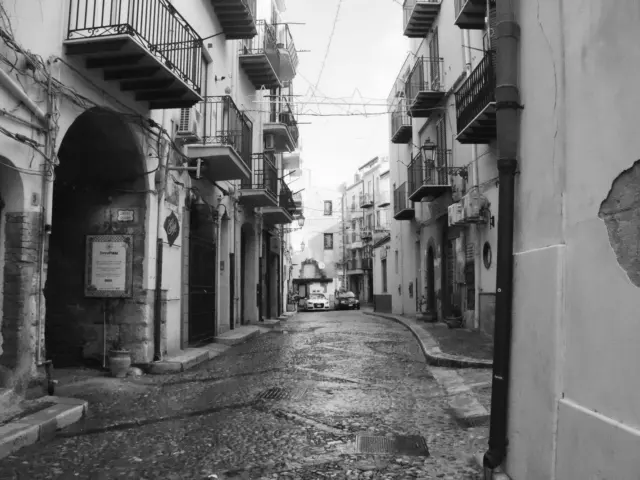
That matches the OBCT account of his exhibition on the longest siege. He selected about 50 black-and-white photographs, and they are not classic war images but snapshots of the daily lives of the citizens of besieged Sarajevo.
The show opened on 5 May at the Italian Cultural Institute in Zagreb and was due to stay until 30 June 2026, as OBCT reported on 15 May 2026. It had already been presented in Rovereto and Belgrade, and OBCT said it would reach Sarajevo by the end of the year.
The girl who ran: a photograph Boccia nearly missed
One of his best-known frames is “The girl that runs”, snapped on 30 September 1993, when Sarajevo had been under siege for 17 months. Boccia told the story himself in a first-person piece published in 2013.
The account reads less like a triumph than a doubt. In order, as he tells it:
- Shells land near a bar where he is waiting for coffee, and he runs to the street with his camera.
- He finds people sheltering in a lobby, holds the camera, but hesitates and does not shoot.
- Back outside, a girl runs towards him. He frames and clicks, and she is already past him.
- He returns to the bar and carries the cold coffee cups in, a small gesture to say all is well.
He reads her run as anger rather than fear, and writes that part of it must have been aimed at him, for “stealing the intimacy of that race”. In the same 2013 text he says: “I have always felt like a jackal, after those photos.”
That honesty is the useful lesson: a war photograph is also a decision about whose privacy you take. He adds that “the camera is a shield that protects and keeps some distance.”
Mostar, 1994: the RAI crew who shielded a child
Not every story is about a photographer who survived. According to Detektor, Italian TV personnel Marco Luchetta, Alessandro Ota and Dario D’Angelo were killed by artillery fire in 1994 while reporting on children in Mostar. They worked out of the RAI office in Trieste.
The three were interviewing children in a building where families had taken refuge when a shell hit. The Italian ambassador said they protected the child they were interviewing with their bodies, a five-year-old boy named Zlatko who survived.
Ambassador Nicola Minasi said the shell came from positions held by the Croatian Defence Council, and Detektor reports that no one has been prosecuted. The report adds that they were among more than 40 journalists and media workers killed in the Bosnian war, per the BH Journalists’ Association.
Photography runs through this story too. A RAI colleague, Walter Skerk, called Ota an excellent photographer and said he was president of the Slovenian photo society in Trieste.
A committee set up after the deaths grew into a charity foundation that, as of Detektor’s January 2021 report, had helped more than 700 children from conflict zones. It also runs the Premio Luchetta, an award for journalists and photo reporters who raise awareness about violence and abuse against children.
Fausto Biloslavo: from Beirut to Kabul
The career of Fausto Biloslavo runs on the other track: the freelancer who goes to the front to sell what he finds. His Wikipedia entry says he was in Lebanon in 1982, at the age of 21, as a freelance writer and photographer.
In 1983 he founded the Albatross Press Agency with Almerigo Grilz and Gian Micalessin, producing TV reports from conflict zones. In 1987 he crossed into Afghanistan from Pakistan and spent four months living with the Mujaheddin, per the same entry.
He was then detained in Kabul and, according to the entry, released after 202 days thanks to former Italian president Francesco Cossiga. Treat the details with care: the same page carries a notice that the biography relies too much on primary sources.
What these stories have in common
Set side by side, the three stories point to a few shared habits of Italian war reporting:
- Going back to the same place more than once, as the RAI crew did before Mostar.
- Looking at ordinary life, not only violence, as Boccia’s exhibition does.
- Accepting risk and its moral weight, from Boccia’s doubt to the Mostar deaths.
Boccia also photographed both the besieged and the besiegers, often crossing the front lines, because in his words, identifying with the victims is easy and reassuring, but it can be hypocritical. He says he visits schools, several hundred in recent years, to talk to young people about what he saw, according to OBCT.
For a different Italian approach to documenting violence, read about letizia battaglia photography. If this work draws you, the guide on how to become a photojournalist is the practical next read.
Frequently asked questions
Who is Mario Boccia?
Show answer
He is an Italian freelance photojournalist and former Il Manifesto correspondent. OBCT says he chose around fifty black-and-white photographs of the siege for his Zagreb exhibition.
What happened to the Italian TV crew in Mostar?
Show answer
Per Detektor, three RAI personnel were killed by artillery fire in 1994 while reporting on children. A five-year-old boy they were interviewing survived.
Did Boccia photograph only the victims?
Show answer
No. Oriente Occidente says he chose to photograph both the besieged and the besiegers, often crossing the front lines.
Where can you see his Sarajevo photographs?
Show answer
As of OBCT’s 15 May 2026 report, the show had been in Rovereto and Belgrade, was in Zagreb until 30 June 2026, and was due in Sarajevo by the end of the year. Check the venue for current dates.
How reliable is the Biloslavo biography?
Show answer
Use it as a starting point. His Wikipedia entry carries a notice that it relies too much on references to primary sources.