Facing a blank wall and a pile of prints? Here is how to curate a photo exhibition: write down a short idea, define your audience and space, choose images that fit, then plan the route, costs and opening.
This guide sits within the wider topic of photo exhibitions and follows a show from first concept to opening night.
| Item | Value |
|---|---|
| Photographers in the pool for the AOP 50th anniversary show | about 4,000 photographers |
| Pictures chosen to span 1968 to 2018 | approximately 50 pictures |
| Yangtze River exhibition | 66 prints at 1.2 x 1.6m |
| Commission at one council-run gallery | 25 percent per work sold |
| Preparation time in that example | six months |
| Images shown in that example | 30 images, including 25 prints at 50x70cm |
The figures come from an interview with curator Zelda Cheatle on theprintspace and a photographer’s account in Australian Photography. They describe individual shows and can change, so check the source before you rely on them.
Start with an idea, an audience and a space
Curator Zelda Cheatle opened her own gallery in 1989 and, according to her theprintspace interview, her first questions are about the audience, the space and the pool of work she will draw from. Her reasoning is simple: every exhibition has a different concept.
Next she writes the idea down as a short statement of what the show is about. She then talks to the artists she has in mind, and the project builds momentum once one or two of them are on board.
Before you pick a single print, answer these in writing:
- Who is the audience for this show?
- What kind of space will it fill, and what does that space allow?
- Which body of work or group of photographers are you drawing from?
- What is the idea, in a few plain sentences?
Keep the plan loose. Cheatle advises against a preconceived picture of exactly what you want, because it can block the happy accidents that shape a good show.
Scale tests the idea. For the AOP 50th anniversary exhibition she chose approximately 50 pictures from about 4,000 photographers, and she needed a sense of the route from 1968 to 2018 before she began, as the same interview explains.
How do you choose a theme and select the images?
A random collection rarely holds together. Adorama’s guide to preparing a photography exhibit says you need a cohesive message that includes location, time, plot and characters, then choose the images that support it. The exhibition becomes a narrative line rather than a pile of favourites.
The same guide suggests keeping the set visually consistent:
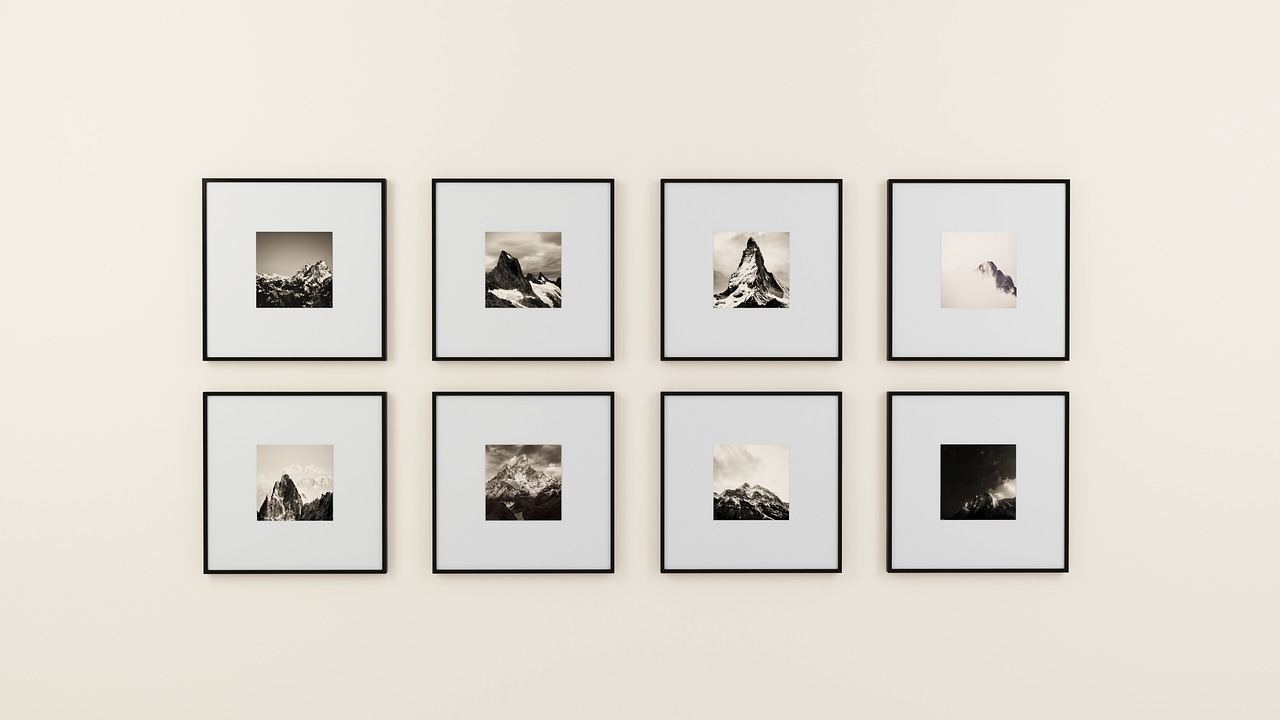
- the same aesthetic, such as monochrome or colour images;
- a single aspect ratio;
- the same set of post-processing effects.
Consistency is not the same as sameness. The images should also include enough diversity to keep the viewer interested and enough common points to build a consistent story.
Be strict about quality. A photographer writing in Australian Photography advises using only your standout work, and found the strongest pictures were those shot specifically for the exhibition.
Digital Photography School makes a related point: others take your work seriously when you stay focused on a similar theme. Technical flaws, such as scratches or damaged frames, undermine that impression.
Let the space shape the layout
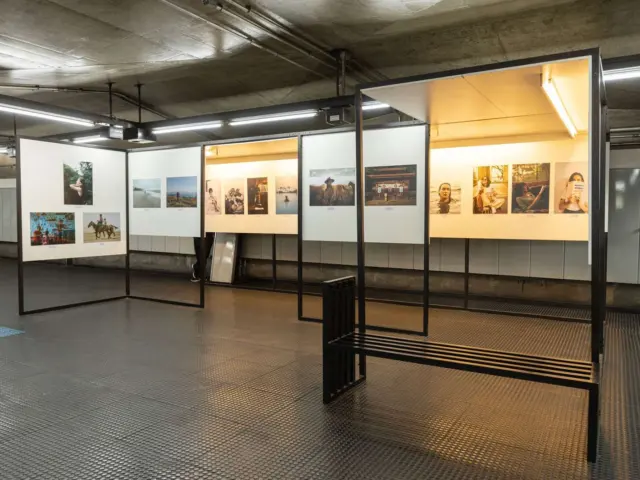
Cheatle notes that space often dictates scale, and that the work and the venue decide each other. Some artists make tiny miniatures and others work at a massive scale, so a layout has to adapt to both.
Buildings bring their own problems. In the same interview she describes the Guggenheim in New York as a lovely building but problematic for big flat works because of its curved walls, and she says very modern buildings with a lot of glass or marble also present problems.
Plan on paper before you plan on the wall:
- Ask the venue for a floor plan and use it to plan the layout, as Adorama recommends.
- Read the contract so you know what the venue permits and does not permit.
- Check the lighting. Cheatle’s wish list starts with good lighting that you can play with.
Balance matters even in small shows. In a two-person show, Cheatle says the layout does not have to be symmetrical, but the content should feel equal.
When the plan works on paper, the guide on how to hang photographs in a gallery covers the physical side of getting prints onto the wall.
Guide the viewer through the show
Good exhibitions are planned as a walk. Cheatle’s example is a show by Yan Preston in China, with 66 prints at 1.2 x 1.6m hung in the order of the Yangtze River from source to sea, because the photographer had taken a picture every 100 km along it, as the interview recounts.
Visitors had to understand the journey first, so the first wall was text. In her words, when a project is conceptual, context comes first.
A lead image helps visitors orient themselves. The Australian Photography contributor recommends hanging it in the most prominent position and perhaps printing it a little larger than the rest; in that show, 30 images were shown, 25 of them 50x70cm prints plus a lead image at 50 x 90cm.
Short wall text can also help. The same writer hung a small storyboard beside some images, and believed the background information helped sell them. The author also warns against overwhelming the gallery with too many images.
To see how institutions sequence photography in person, the guide to photography museums in italy is a useful starting point for places to visit.
Budget, costs and prices
Adorama advises building a budget before anything else, and its list of costs is a handy checklist:
- venue rental;
- printing, mounting and framing;
- marketing materials such as business cards, posters, flyers and brochures;
- food and drinks;
- transporting the artwork and pieces such as display mounts.
The harder question is who pays for what. Cheatle says the artist sometimes pays all production costs, or even a rental fee for a pop-up show, while at other times the gallery covers framing and mounting. Work out the budget and responsibilities from the start, because unexpected costs always appear.
Ownership is part of the same decision. When she ran a gallery, it paid for mounting, framing, marketing and the private view, but not print production, so the photographer still owned the work.
Solo or group is also a cost choice. Adorama notes that a solo show puts all expenses and risks on you, while a group show is a pooled investment you can divide, although audience attention and wall space are shared too.
Prices are a matter of taste. Cheatle’s gallery kept a price list for visitors rather than displaying prices beside the artwork, and she points out that at Photo London, with 50 galleries, some show prices and some do not. In the Australian Photography account, the photographer chose good-looking but less expensive frames to keep prices affordable, which was believed to have led to more sales.
Curate a photo exhibition from application to opening night
You do not need a prestigious gallery to start. Digital Photography School says local city halls, libraries, restaurants, businesses, churches and schools will often let you hang work for free. Adorama adds cafés, community centres and shops, where the host can also serve refreshments.
If you apply to a gallery, prepare a proper pitch. The Australian Photography writer suggests including:
- a blurb about your work, with achievements, credentials, experience and awards;
- your reason for exhibiting;
- whether you will print in colour, black and white or a mix;
- how you will present the work, including framing and any deadlines.
Leave plenty of lead time. That photographer applied well ahead of the start date, which left plenty of time to prepare. The show ran for a month, and the council-run gallery took a commission on each work sold.
On opening, a “meet the artist day” worked like an opening day. The photographer declined an offered workshop because the cost of insurance was too high, a reminder to check such costs before you say yes.
Presentation is judged along with the pictures. Digital Photography School says people judge you by the quality your work is kept in and how you present it, so check mats, frames and glass before the doors open.
Frequently asked questions
How do you start curating a photo exhibition?
Show answer
Write down who the audience is, what the space is and what the idea is, then choose images that support that idea. Treat the written idea as a guide and stay open to changes along the way.
Should prices be shown next to the photographs?
Show answer
It is a personal choice. Cheatle’s gallery did not display prices beside the artwork but offered a price list that visitors could pick up, and she notes that galleries at Photo London handle it differently.
Is a solo or a group show better for a first exhibition?
Show answer
A solo show keeps the focus on your work but puts all expenses and risks on you. A group show divides them, but your audience’s attention and your wall space are shared.
Who pays for printing and framing?
Show answer
It varies. Sometimes the artist covers all production, sometimes the gallery pays for framing and mounting, and sometimes a corporate space pays a loan fee. Agree the split in writing at the start.